Design with quiet intent.
A visual framework for considering form, function, material, proportion and everyday living.
An editorial position
This is a clear way of looking at the studies in this portfolio. It describes how the studies are composed. It is not a statement about how any object is manufactured.
Begin with a recognisable gesture.
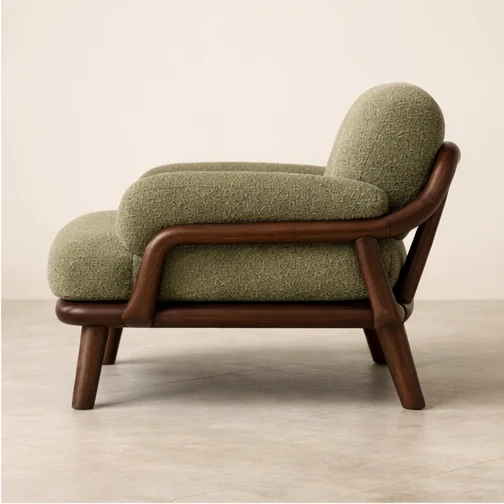
A curve around a seat. An oval resting on two planes. A shade with a gently shifting rim. In these studies, form starts with one clear idea that can be read from more than one viewpoint.
The question is not how much detail an object can hold, but whether its central gesture remains legible without explanation.
Give everyday use a visual structure.
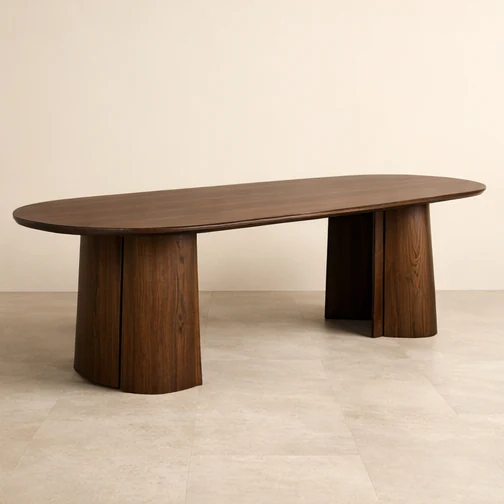
A place to sit, gather, pause or arrange provides the starting point for each composition. Function is treated as a design brief for the artwork, not as a verified performance claim.
Dimensions, ergonomics, load ratings and technical behaviour remain unpublished until they can be properly verified.
Let the surface carry the light.
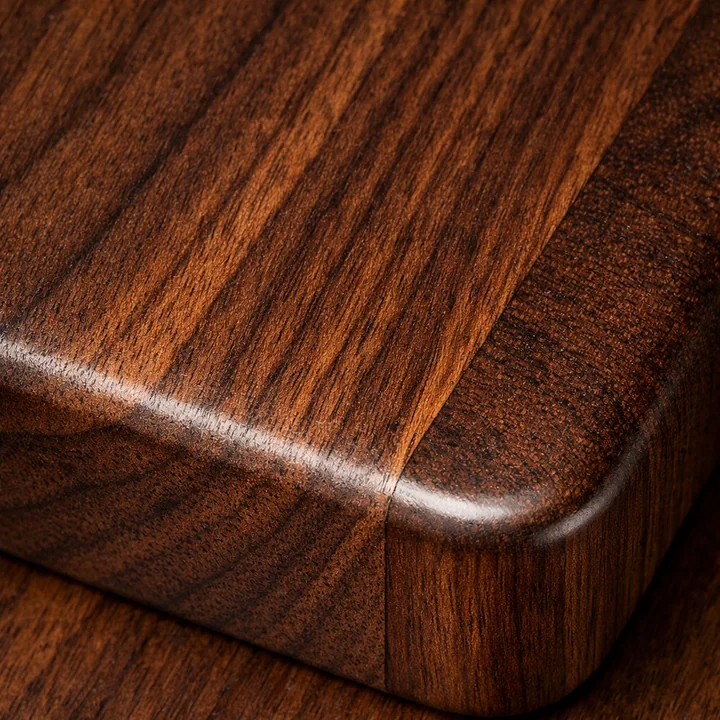
Grain, loops, mineral variation and matte boundaries bring depth to the portfolio. Close-up imagery allows these visual qualities to be examined independently of the complete object.
Material names in the library describe an illustrative appearance. They do not assert composition, source, certification or manufacturing method.
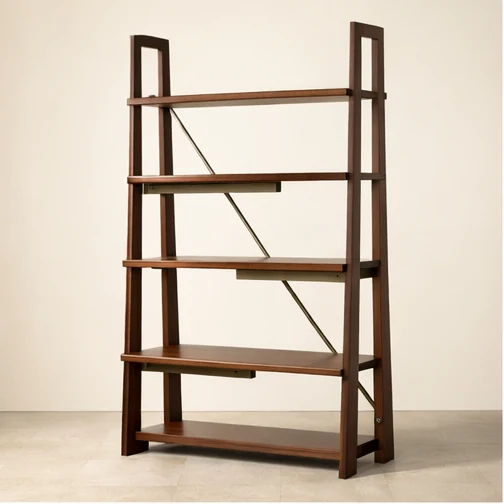
The space between is part of the object.
A thin top against a broad support. Four shelves separated by unequal intervals. Three vessels with distinct but related scales. Proportion creates rhythm across both furniture and interior compositions.
The image studies use visual relationships rather than published measurements. No scaled drawing or dimensional guarantee is implied.
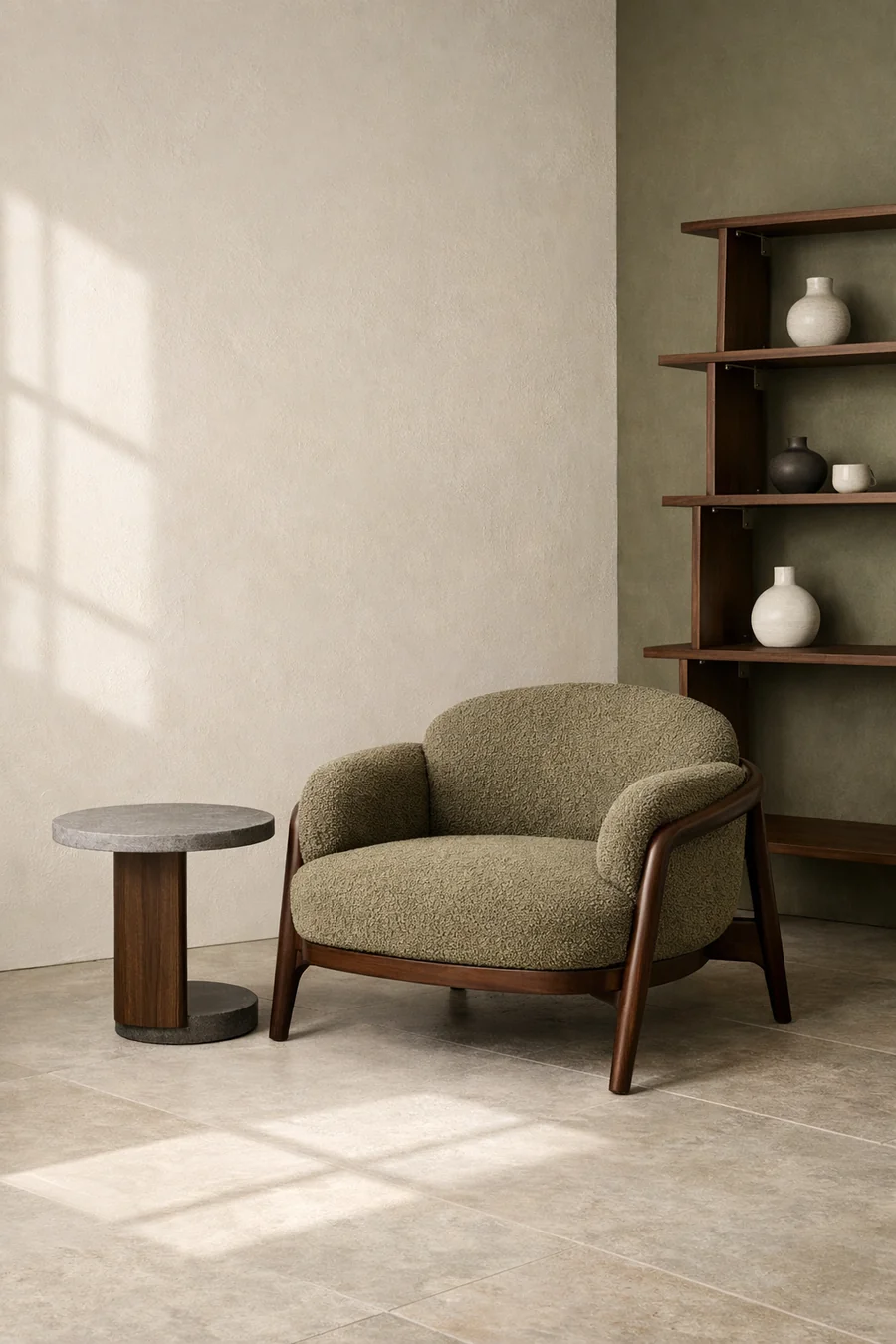
Leave enough room for life to happen.
The interior concepts resist filling every surface. Open wall, floor and shelf areas create pauses around the objects, allowing light and silhouette to become part of the scene.
This is an editorial perspective on everyday living, not a claim about how a commercial product is made or how long it will last.
See the principles in the objects.
Move from perspective to portfolio. Every study is shown in four matched views, so the reading of its form can be checked from more than one side.